
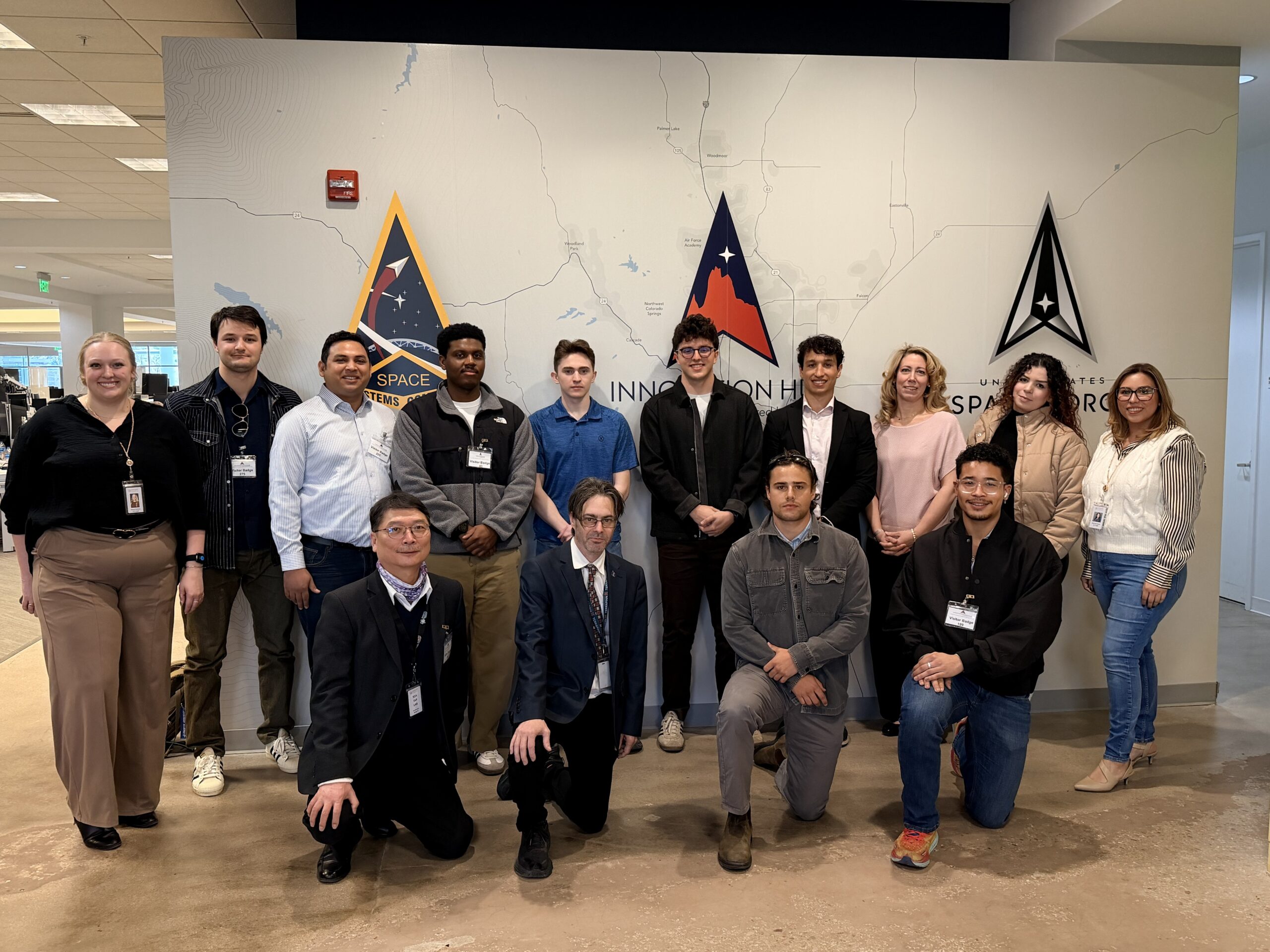

Center for Space Laser Awareness (CFSLA) is a 501(c)(3) nonprofit founded by Shaw Prize laureate and NASA Kepler co-investigator Dr. Geoffrey Marcy. CFSLA detects, characterizes, and monitors satellites and anomalies from the ground, delivering intelligence that standard observation methods miss. Operating telescopes in Dark Sky, New Mexico, CFSLA provides observation data to the U.S. Space Force. A unique spectroscopic telescope identifies what satellites are made of, detects anomalies in orbit, and assigns each spacecraft a one-of-a-kind spectral fingerprint. Partnered with OpticalX LLC, CFSLA also hunts the faintest targets, finding space debris and uncatalogued objects that current systems cannot see.

Green Optics is a comprehensive optical solution provider specializing in high‑precision technologies. From advanced materials to complete optical systems, we deliver end‑to‑end solutions across diverse industries. Our wide‑field telescope, with a field of view of 4.4 × 4.4 degrees, represents the largest field‑of‑view telescope of its kind, showcasing our leadership in optical innovation. With strengths in design, manufacturing, and integration, Green Optics supports semiconductors, displays, medical devices, and defense with reliable, cutting‑edge optical solutions tailored to global needs.
Kharros builds productized test and evaluation for dual-use AI systems. We translate real contract requirements into standardized tests, datasets, and scoring rubrics, then issue a certification with a scorecard and evidence pack showing exactly what was tested and the results. Starting in Space Domain Awareness, our benchmarks help vendors prove capability upfront and help government teams down-select faster with less integration risk. We are vendor-neutral and never compete with the companies we evaluate.

Legion Space is shifting intelligence from Earth to orbit so space systems can sense, decide, and act in real time. We build a plug-and-play AI payload and orchestration layer that securely runs and coordinates onboard apps across diverse spacecraft, sensors, and partners. Legion reduces reliance on constant ground contact, cuts downlink burden, and accelerates time critical decisions, even in disconnected or contested environments. Our platform helps operators move from manual workflows to scalable, collaborative operations across single satellites and multi-asset constellations.

Look Up Space is a European space company delivering independent, high fidelity LEO intelligence that turns data into decisive action. Built on its own radar network and advanced analytics, Look Up detects, characterizes, and tracks objects others miss—bringing clarity where uncertainty creates risk. Its SYNAPSE software converts raw observations into operational insight, enabling faster, more confident decisions for defense, government, and commercial missions. In an increasingly contested orbital environment. Look Up provides trusted European capability with global impact.
MSPB is dedicated to revolutionizing network communications and data transfer. MSPB has found that timing irregularities are a huge barrier to enhanced and reliable communications and other data tasks. MSPB has built a suite of network clocking tools that can take on complex sensor fusion and other data aggregation challenges. MSPB's mission is to enable confident decision making by making large data sets more reliable and delivering them in real time.

SkyMesa Systems builds software that helps teams keep track of hard-to find RF emitters for Space Domain Awareness. We connect to existing satellite RF sensors and turn noisy detections into conservative location and track cues, plus recommendations for where to look next when signals are intermittent. Our outputs are repeatable and come with a clear explanation of confidence so test teams and operators can trust what they’re seeing. This improves custody and decision speed without needing new payload hardware.

Stellerian builds the AI autonomy layer for space, delivering passive, on orbit intelligence that lets spacecraft detect, track, and act without ground latency or active emissions. Our long-range navigation extracts reliable tracks from the faintest optical signatures, including objects that appear as only a single pixel of light, enabling early warning and persistent custody for space domain awareness. Our ARGUS stack brings that custody to close range with monocular pose estimation plus navigation filtering and guidance and control, enabling autonomous rendezvous, inspection, and servicing of uncooperative targets. Together, our software first approach and optional low-SWaP hardware turn existing spacecraft sensors into a coordinated capability that unlocks safer, faster, and more resilient operations in contested space.

ULOOK develops autonomous ELIMINT satellite swarms that integrate space-based ELINT and IMINT to deliver resilient, wide-area awareness in contested and congested domains. Our initial capability is a three-satellite RF Geo intelligence cluster that enables non-cooperative detection and geolocation of RF emitters from low Earth orbit, along with time-based activity characterization. Designed for proliferated architectures, this cluster serves as both a mission-relevant RF intelligence pathfinder and a reconfigurable RF sensing layer for space domain awareness, supporting SDA objectives such as threat detection and anomaly characterization.